Types of Sales Execution Platforms (And How to Choose What Fits Your Sales Motion)
August 9, 2025

Picture this: You’re staring at four different sales platform demos, each promising to revolutionize your team’s performance. You see CRM-based platforms, AI-first execution tools, workflow-automation systems, and hybrid solutions that blend multiple approaches.
Your head’s spinning, and you’re wondering—which type actually fits how your team sells?
The Four Main Types of Sales Execution Platforms
Before diving into the specific categories, it’s worth understanding: what is a sales execution platform? These tools differ significantly from traditional CRMs—while CRMs focus on data storage and organization, execution platforms are designed to guide actions and optimize the actual selling process.
With that foundation, let’s explore the four main types you’ll encounter:
AI-First Sales Execution Platforms
Built from the ground up with AI as the core engine, these systems analyze your sales conversations, predict deal outcomes, and suggest next steps based on patterns across thousands of similar sales cycles.
Best for: Teams drowning in data who need intelligent guidance on what actions to take next, or sales managers struggling to coach effectively at scale.
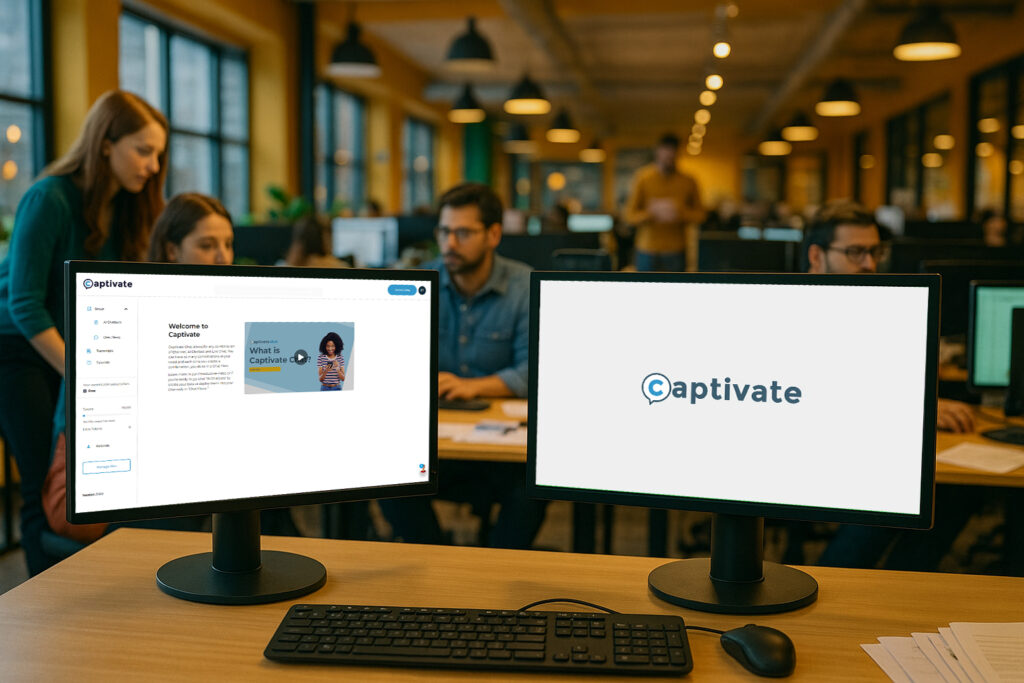
Captivate Salespilot falls into this category, providing AI-powered coaching before, during, and after every sales interaction. The platform follows previous call information, information about your prospect, and also your proposition to deliver increasingly personalised guidance in the form of sales briefings, mini courses, call prompts, and automations.
CRM-Based Sales Execution Platforms
These platforms build directly on your existing CRM infrastructure, extending its capabilities without requiring you to abandon your current data structure.
Best for: Teams already invested in a major CRM (Salesforce, HubSpot, Pipedrive) who want enhanced functionality without data migration headaches.
Workflow-First Sales Execution Platforms
These platforms focus on standardizing and automating your sales sequence, ensuring no prospect falls through the cracks and every rep follows your proven methodology.
Best for: High-volume sales teams with repeatable processes, SDR teams doing prospecting at scale, or organizations where consistency matters more than customization.
Hybrid Execution Platforms
This category combines elements from all approaches—offering CRM integration, AI-powered insights, and workflow automation in a single package.
Best for: Mid-market companies that want comprehensive functionality without managing multiple vendor relationships, or teams with diverse sales motions.
Platform Comparison Table
| Platform Type | Best For | Key Advantages | Primary Use Cases | Typical Cost |
|---|---|---|---|---|
| CRM-Based Builds on existing CRM | Teams heavily invested in Salesforce, HubSpot, or similar CRMs | Seamless integration, no data migration, familiar interface | Lead scoring within existing system, automated CRM workflows, enhanced reporting on current data | £38 – £113/user/month |
| AI-First Built around artificial intelligence (Captivate Salespilot) | Data-rich teams needing intelligent insights and coaching at scale | Predictive insights, automated coaching, continuous learning | Mini Course and call briefing generation, real-time conversation coaching, deal risk prediction, identifying successful talk tracks, automated performance insights and recommendations | At least £79/user/month |
| Workflow-First Focuses on process automation | High-volume teams with repeatable processes, SDR teams | Perfect process execution, great for scaling, easy onboarding | Standardising outbound sequences, ensuring consistent follow-ups, automating repetitive prospecting tasks, scaling SDR activities | £56 – £150/user/month |
| Hybrid Combines multiple approaches | Mid-market companies wanting comprehensive functionality in one platform | All-in-one solution, single vendor, adaptable to changing needs | Complex multi-touch sales cycles, companies with diverse sales motions, teams transitioning between methodologies, comprehensive sales operations | £94 – £188/user/month |
How to Choose the Right Type for Your Sales Motion
Understanding the key differences when comparing a sales execution platform vs CRM is crucial—execution platforms provide guided workflows, predictive insights, and automated coaching that CRMs simply weren’t built to deliver.
Start with Your Process Maturity
If your sales process is still evolving, avoid rigid workflow systems. If you’ve nailed down what works, workflow-first platforms can scale your proven methods effectively.
Consider Your Team’s Tech Comfort
According to recent studies, 67% of sales reps say they spend too much time on administrative tasks. The wrong platform choice can make this worse. Sometimes the best sales execution platform is simply the one your team will actually use consistently.
Evaluate Your Data Situation
AI-first platforms need substantial data to deliver value. If you’re a newer company or don’t have rich conversation data, start with CRM-based or workflow solutions and evolve over time.
Factor in Growth Plans
Choose based on where you’ll be in 18 months, not just current needs. A platform that works for 10 reps might crumble under 50. Look for solutions that can scale with your growth in both user capacity and feature sophistication.
Making Your Decision
The reality is there’s no universally “right” type of sales execution platform. The best choice depends entirely on your specific sales motion, team dynamics, and business objectives.
That’s exactly why we built Captivate Salespilot as an AI sales assistant with an intelligence engine that adapts to your team’s unique sales motion. Rather than forcing you into rigid workflows or overwhelming you with data, our platform learns from your successful deals and helps every rep replicate those winning patterns.
Book a Demo and let’s explore your specific needs together.
Do you want to expand your sales knowledge? Here is our guide about sales automation platforms.
Frequently Asked Questions
Common questions about this topic
What's the difference between a sales execution platform and a CRM?
While CRMs focus on storing and organizing customer data, sales execution platforms are designed to guide actions and optimize the selling process.
CRMs still require manual updates, admin, and toggling between tools. Sales Execution Platforms reduce friction for reps by automating admin, surfacing insights, and keeping them focused on selling—not spreadsheets.
Can small sales teams benefit from sales execution platforms?
Absolutely. Smaller teams often see faster ROI because they can implement changes more quickly.
How long does it take to see results from a new sales execution platform?
Most teams start seeing improvements within 30-60 days, with significant results emerging after 90 days once reps are comfortable with new workflows.